For a number of years now, I have been recovering relics from the site of an old stately home estate, occupied by the Royal Army Ordnance Corps (RAOC), during WW2. I have posted a number of blogs here relating to individual digs, but thought I’d combine all the finds recovered from all digs at the site in to one post.
A very short history…… Garendon House has a history dating back to 1536, when Henry VIII dissolved the abbey that was on the site, and sold it to the 1st Earl of Rutland, Thomas Manners. Various owners expanded the house, built follies and developed the park land until the estate finally passed to the De Lisle family the 1800s. In 1885, due to the repairs needed to Garendon Hall and lack of adequate funds, they moved to Grace Dieu Manor. It wasn’t until 1907 that they finally returned to Garendon, when their financial situation improved. The family were forced out of the house during WW2, with the hall and surrounding land being used by the RAOC as an ordnance storage and processing site. The army occupation resulted in severe damage to the house, with the cost of repairs being so prohibitive, (and the loss of land to a fast expanding Loughborough, as well as the M1 motorway cutting through the park), a decision was made to demolish Garendon Hall. In 1964 it was deliberately set on fire to allow the local fire brigade to practice on, and then razed to the ground. Only the follies dotted around the landscape and one small annex to the main house remain of the original structure.
The RAOC stored 30,000 tons of ordnance both on the park itself, and along the sides of country lanes all around Loughborough and surrounding villages. At the end of the war, all this ordnance had to be collected, processed, and either put back in to store, recycled, or disposed of. The type of ordnance that went through the site varied from small arms ammunition, through to grenades, mortars, PIATs and artillery shells of various calibres. Anything that couldn’t be sent back to storage due to age, deterioration, or being obsolete, was placed in a pit at the top of the estate and ‘disposed’ of by the simple process of blowing it up! Many a complaint was dealt with by the base commander as local residents were regularly shocked by huge explosions going off at the site.
It is the remains of ordnance from not only these controlled explosions, but also other items around the site of the house itself, that I have been recovering for many years. Finds range from the remains of this exploded ordnance, to cartridge cases, cap badges and personal items. I’ve tried to gather them all in the pictures below.
NOTE – None of the items recovered from the site and shown below contain any explosive or propellent material at all. All items are FFE and legal to possess.
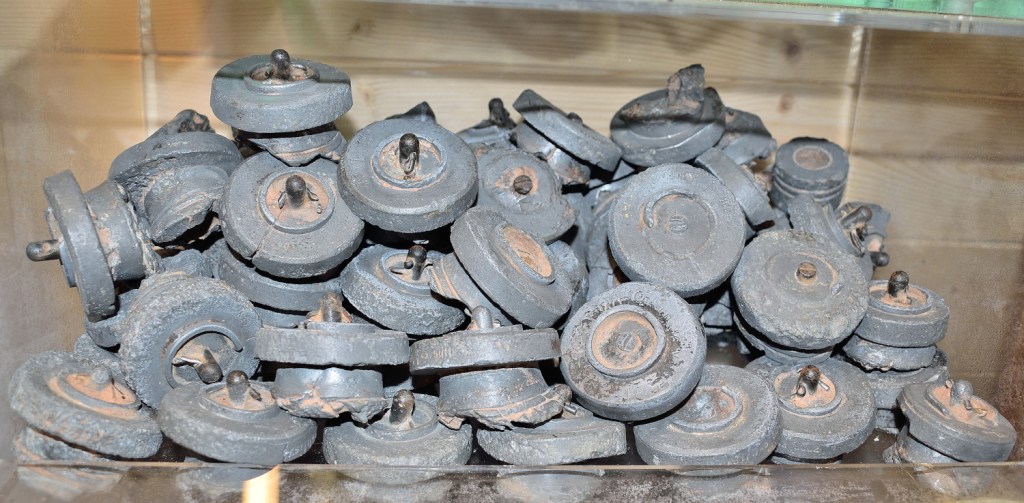
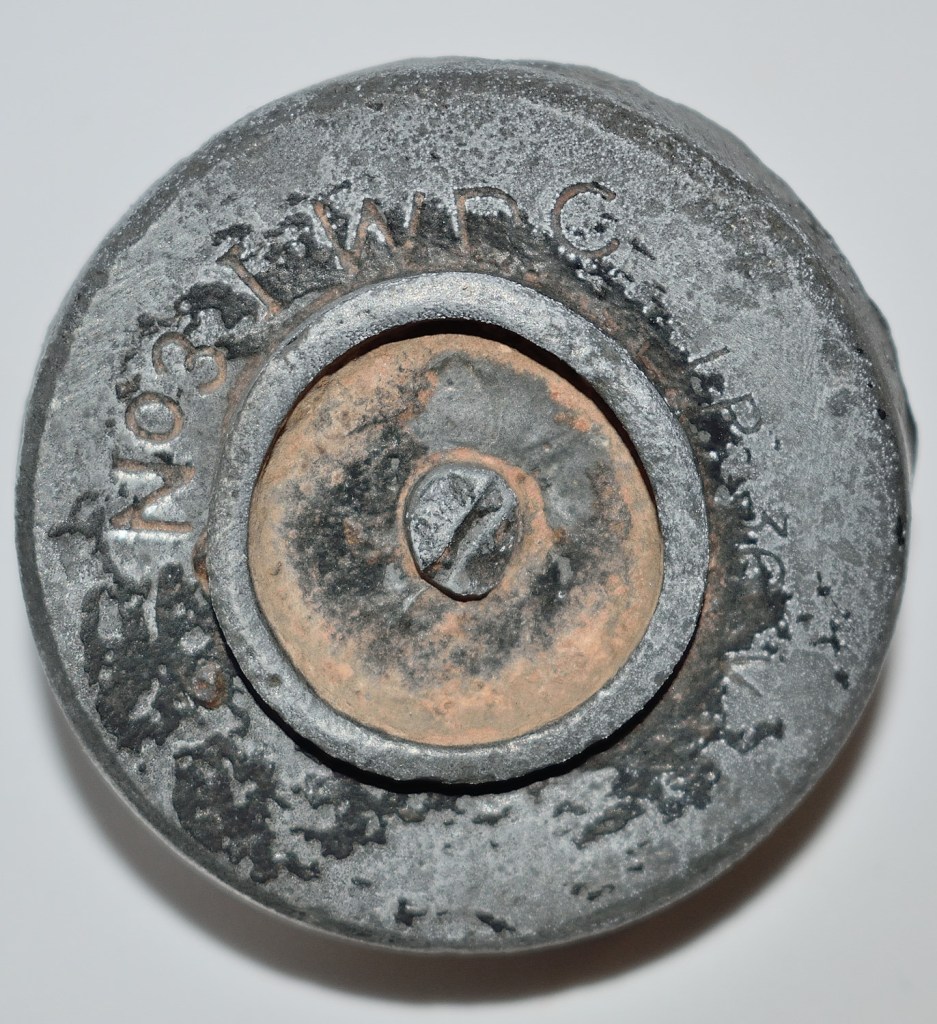


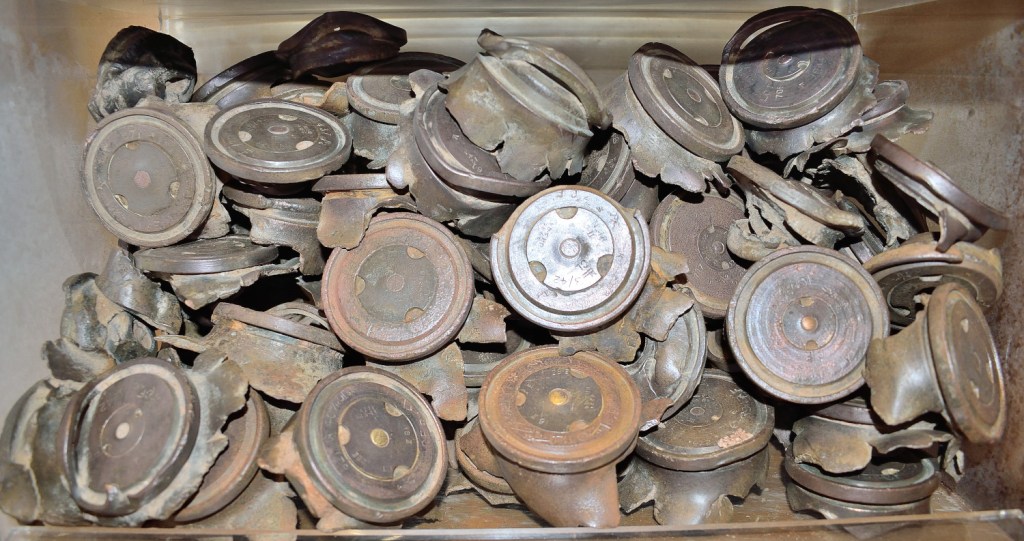
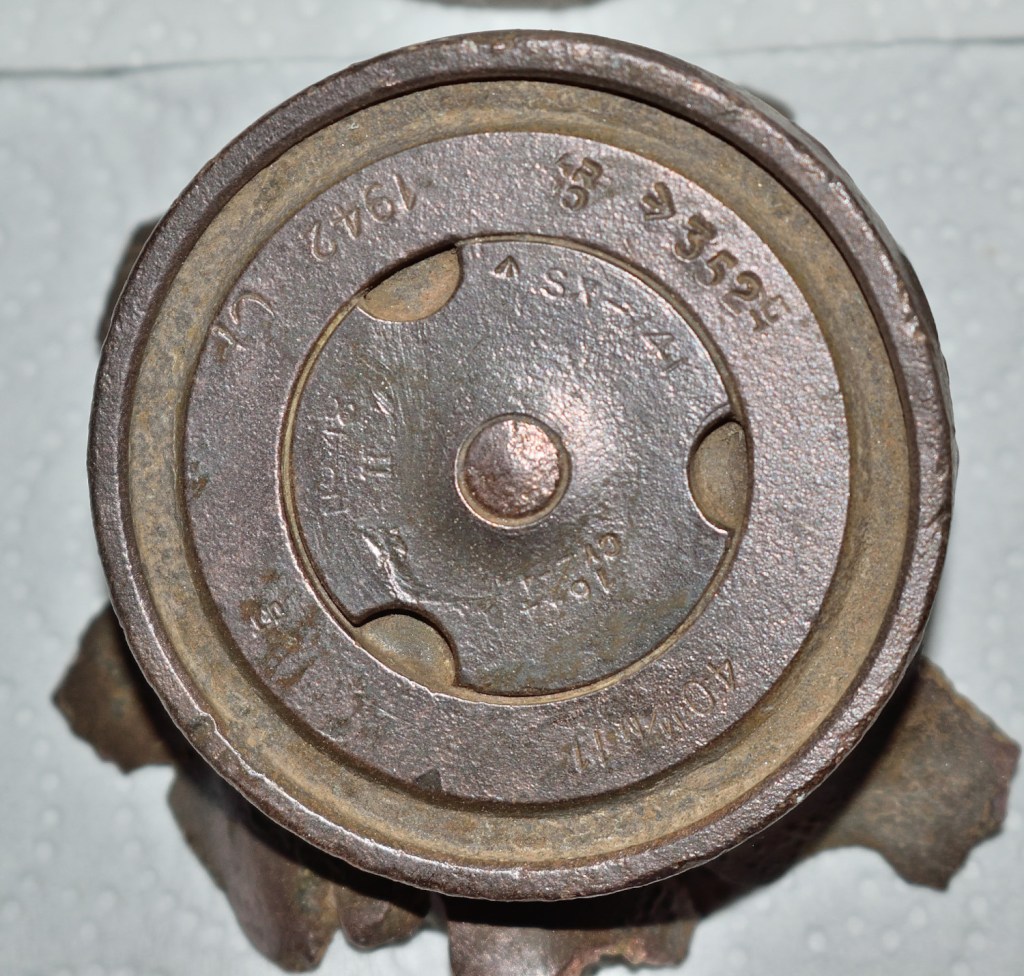
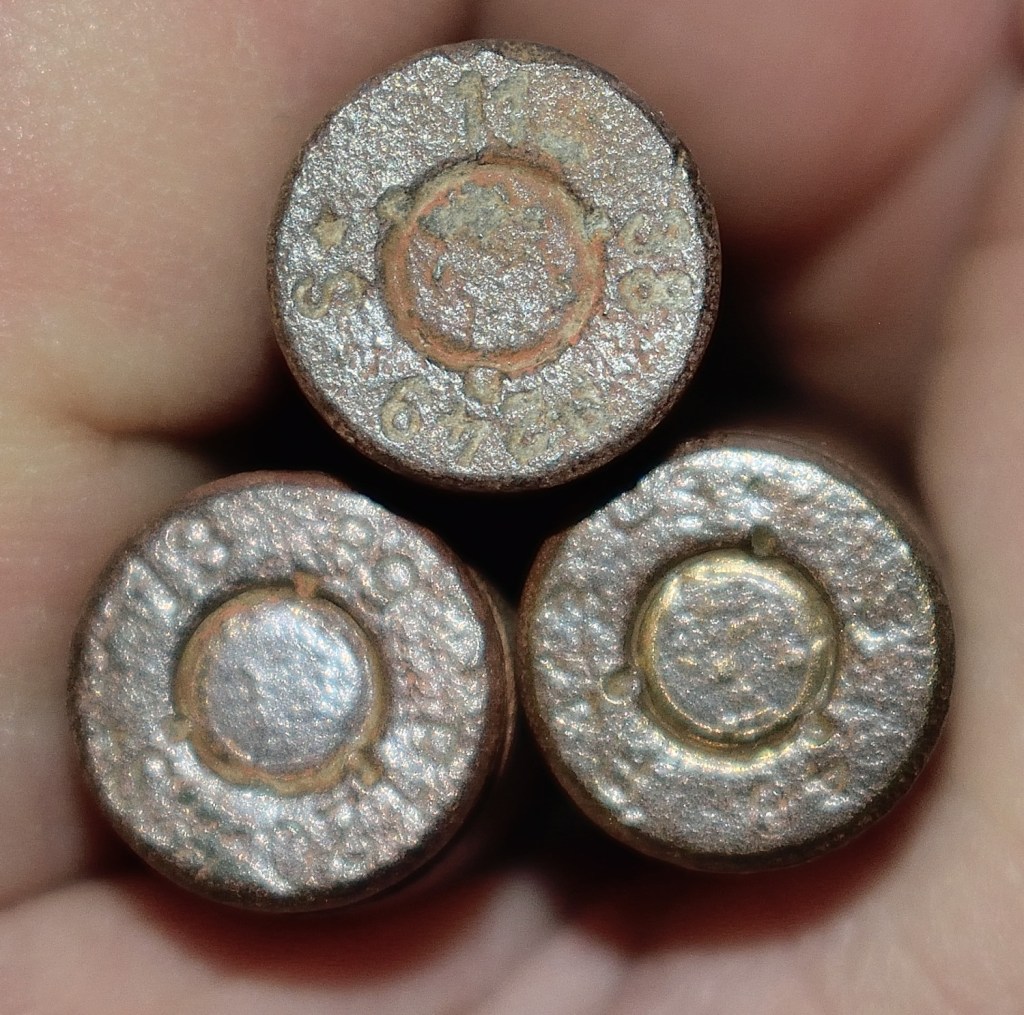
In the same location, the remains of 40mm Bofor’s shells are often found. They show the effect of the disposal methods, with over 100 shell bases in this stack recovered over many visits. The headstamps show lots of different manufacturers and dates, and also the effect of the explosions.

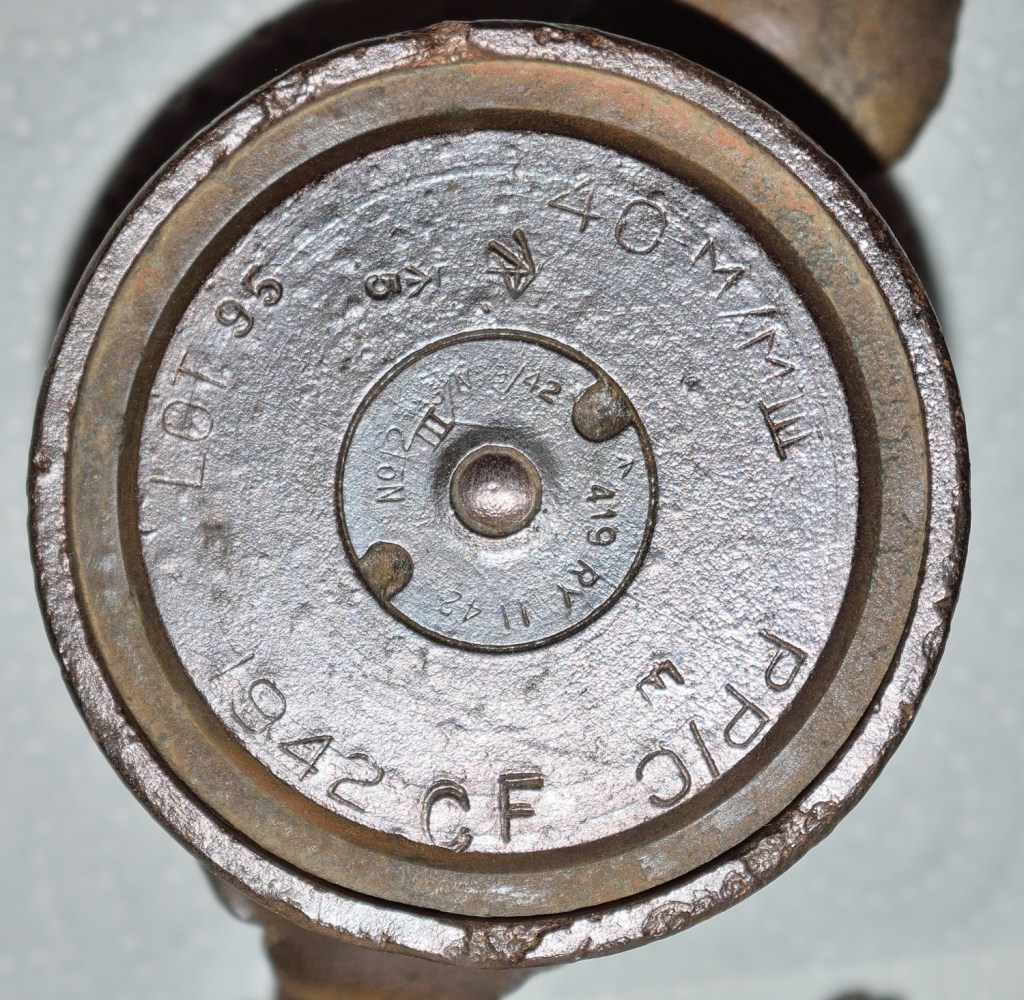
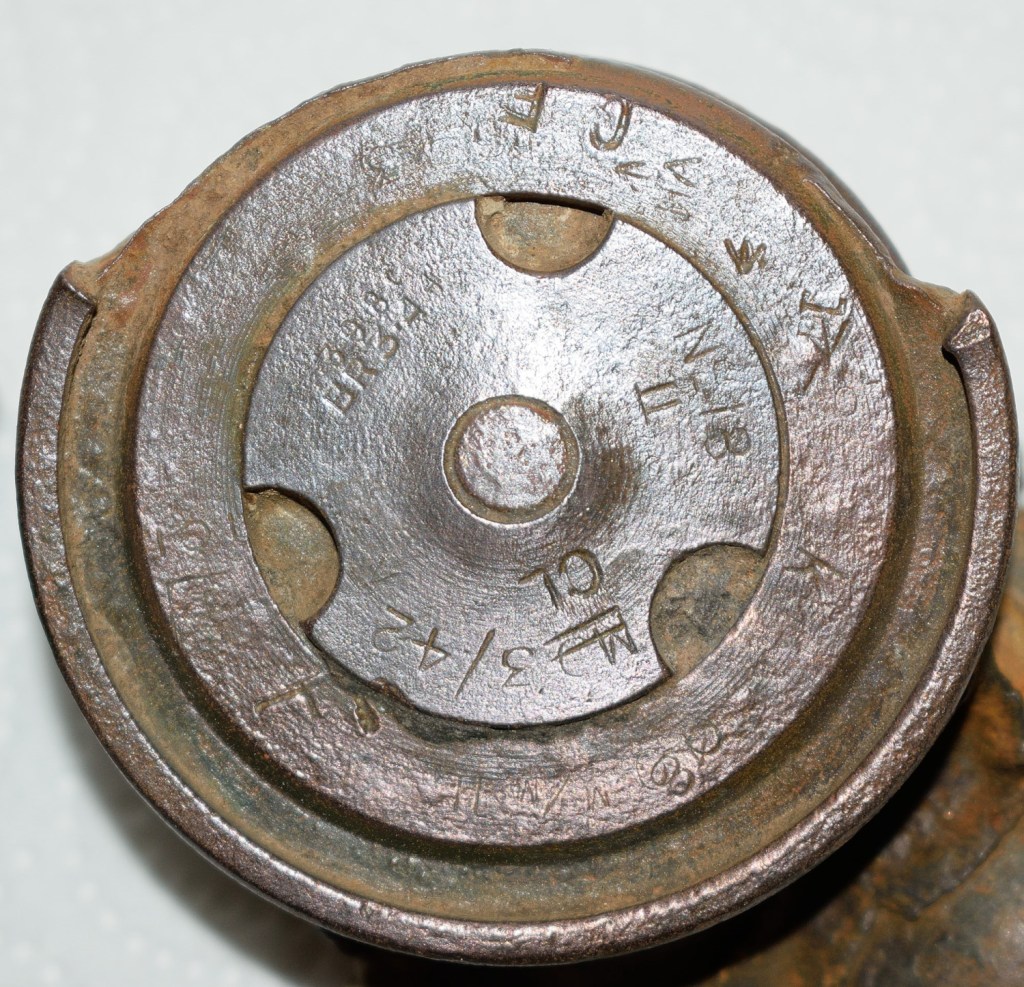

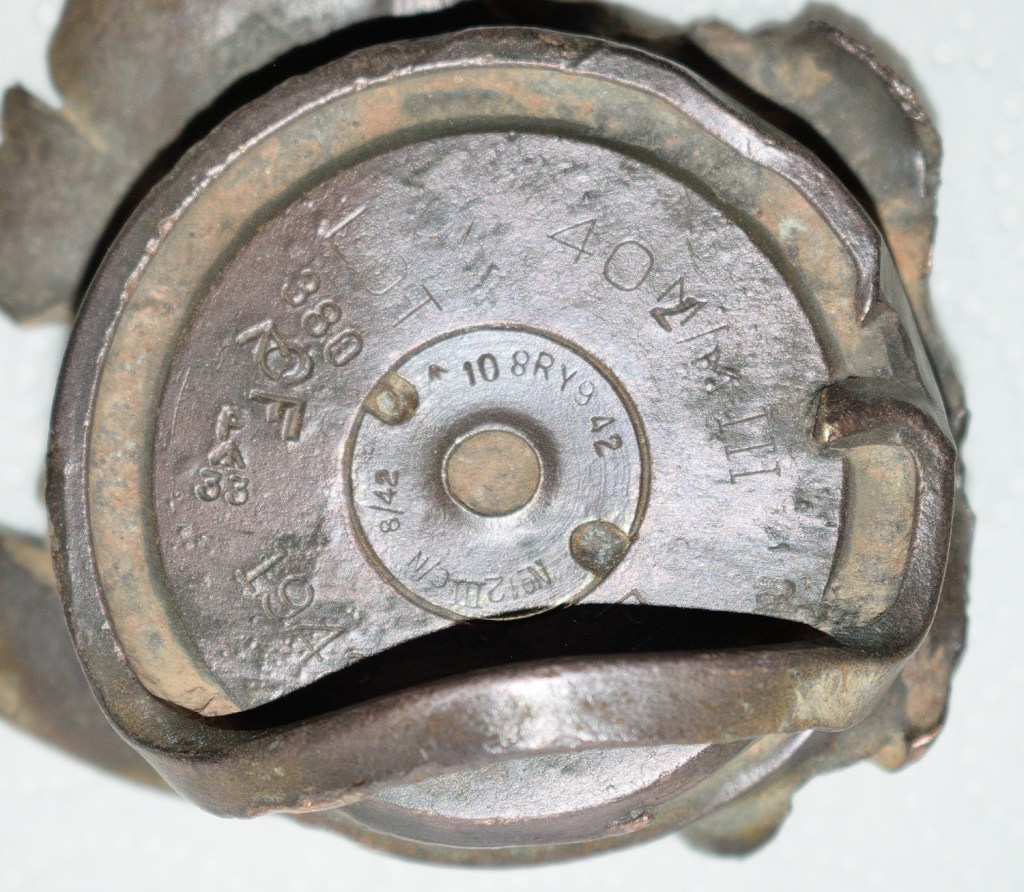
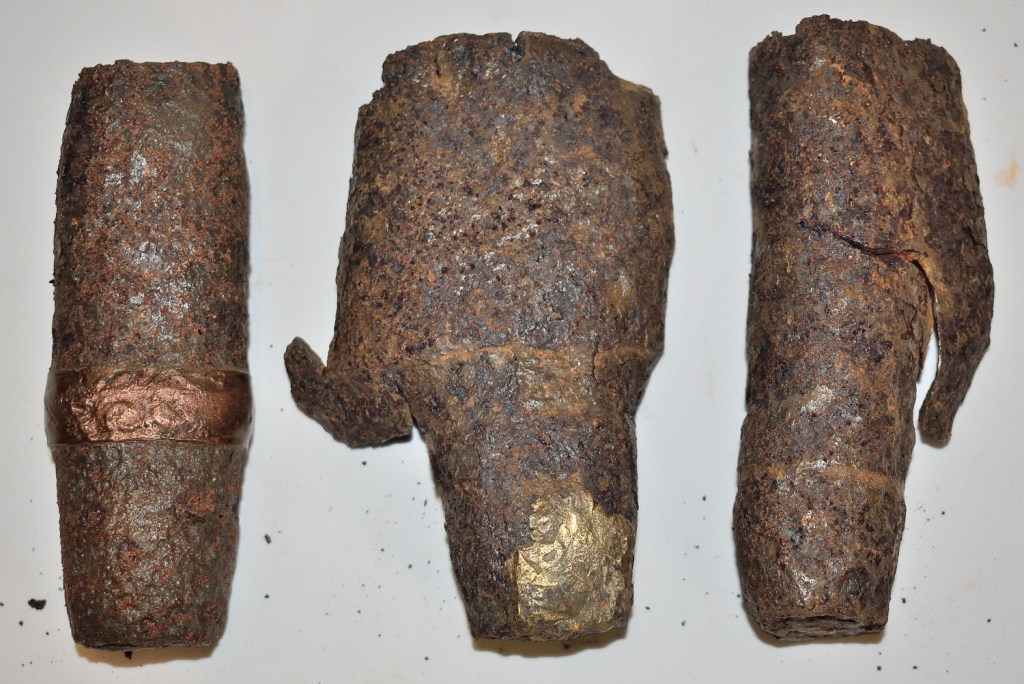
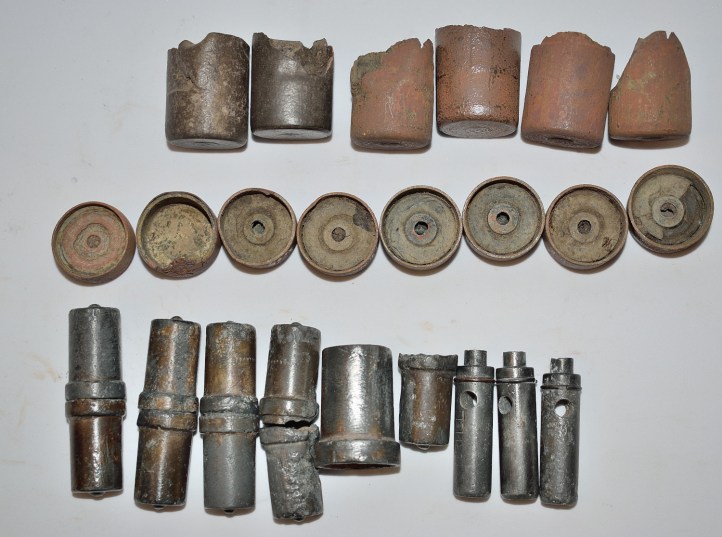
The same field also contains thousands of chunks of the 40mm shell casings, as well as the remains of the fuzes and projectiles themselves.
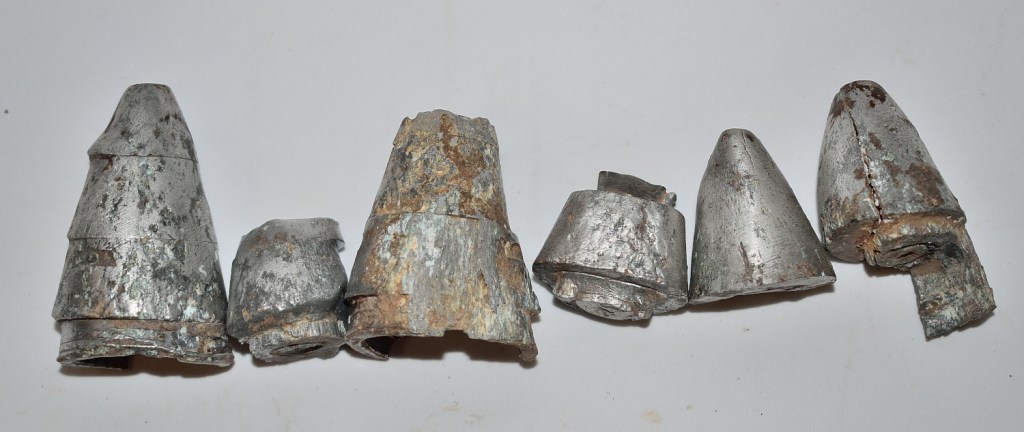
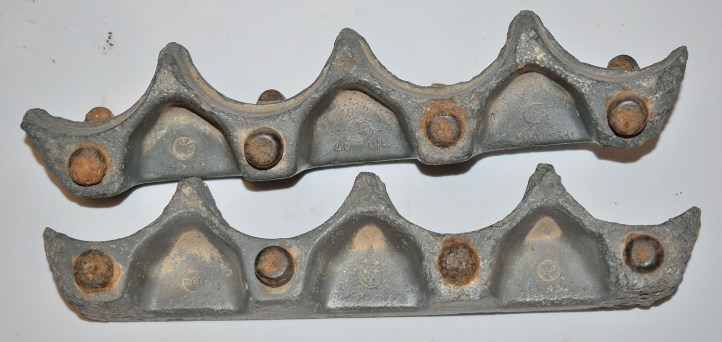
The remains or the percussion fuzes and boosters are also in abundance it the same area, all from the 40mm shell cases.
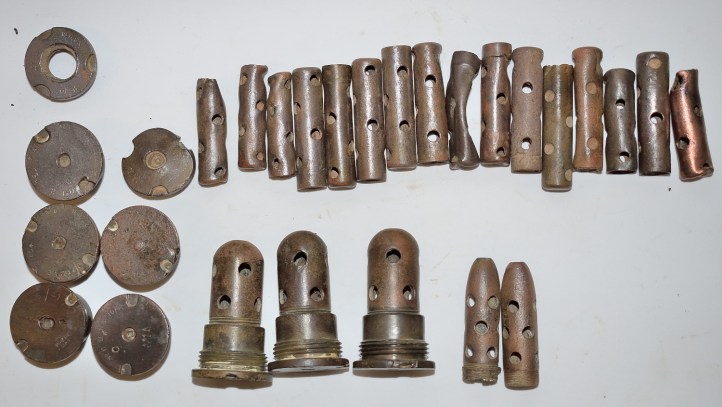

Other finds from the same field…..


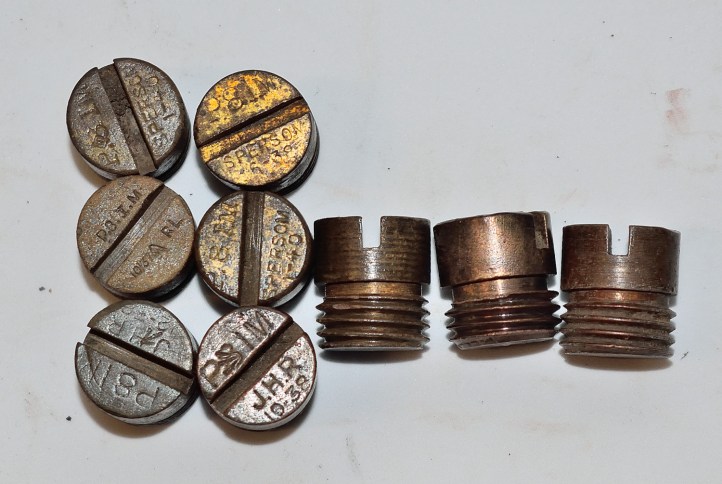
Around the living quarters of the site and the surrounding areas (usually, I have noted, within throwing distance of the huts!), I have had lots of other finds. Next to the living quarters for the enlisted men, (who weren’t allowed to sleep in the main house), were the workshops for dismantling ordnance. It is here where they removed fuzes etc during the disposal or re-use work they were carrying out on the ordnance. They were also moving ordnance around the area, so any boxes that opened or were compromised in some way, the contents would spill on the ground. They weren’t too fussy about what they left lying around, which is great for the relic hunter as I find them 80 years later.

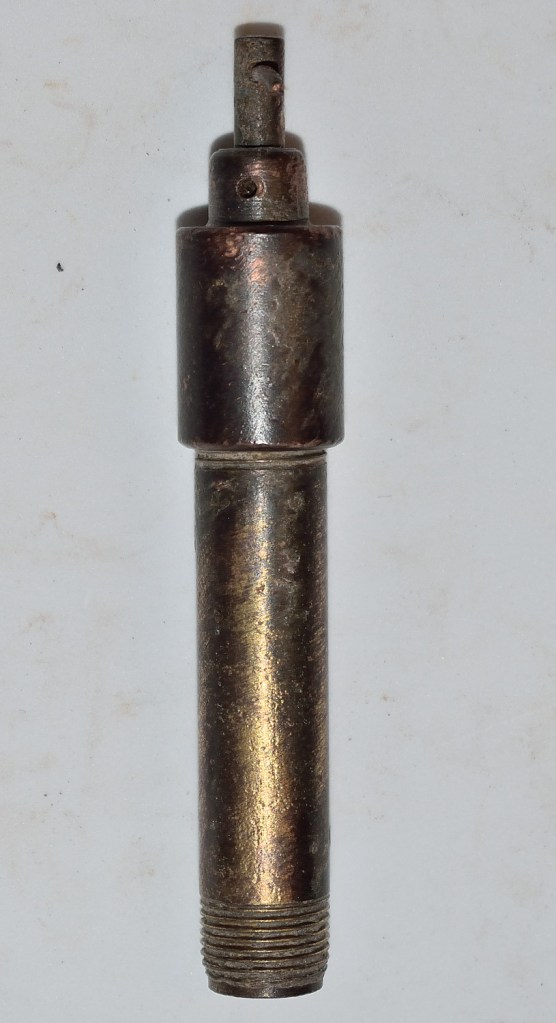


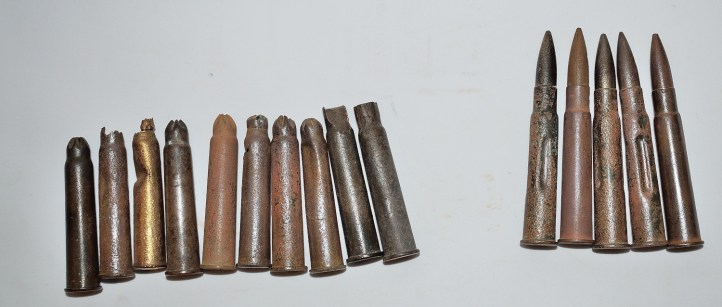
Of course, no military site would be complete without a few small arms cartridge cases. These are just a few of the total recovered, with 303s in particular being in abundance all over the site. And by ‘abundance’, I mean in their thousands.




On the field next to where all the huts were, I found a very small area littered with PIAT relics. I have speculated that, during a moment of boredom, someone decided to let off a few PIATs!
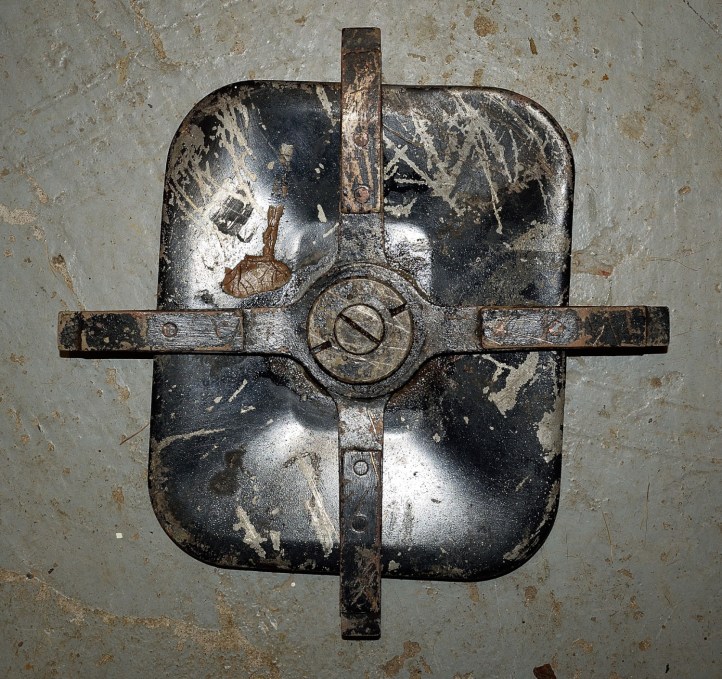
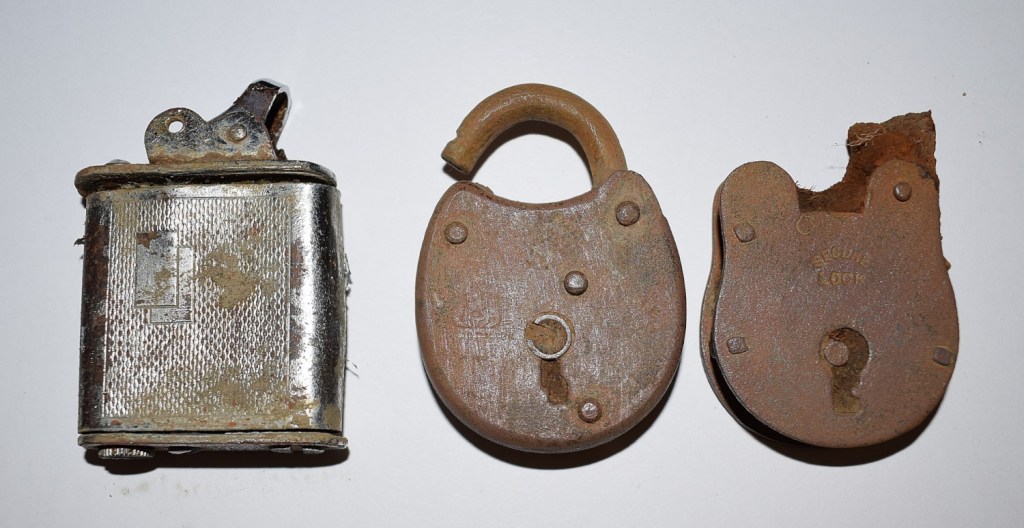
In and around the area of the huts were also a lot of personal items, not ordnance related, but they give an idea of life at the camp. Badges, buckles, toiletry tins, cutlery, locks, lighters, buttons, coins……….

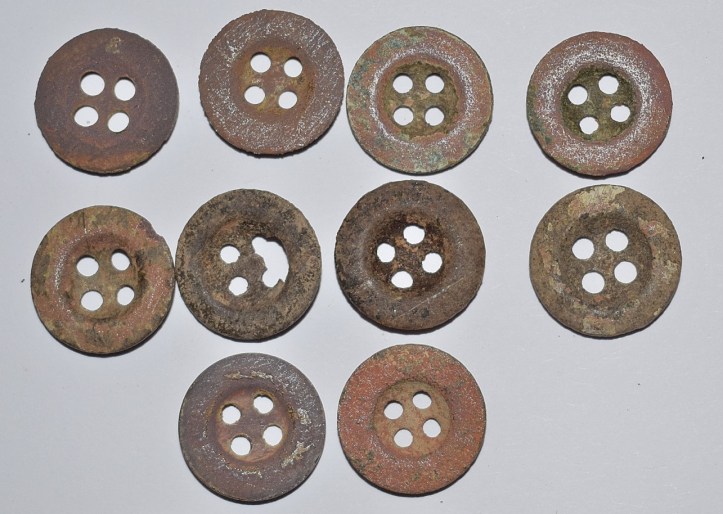

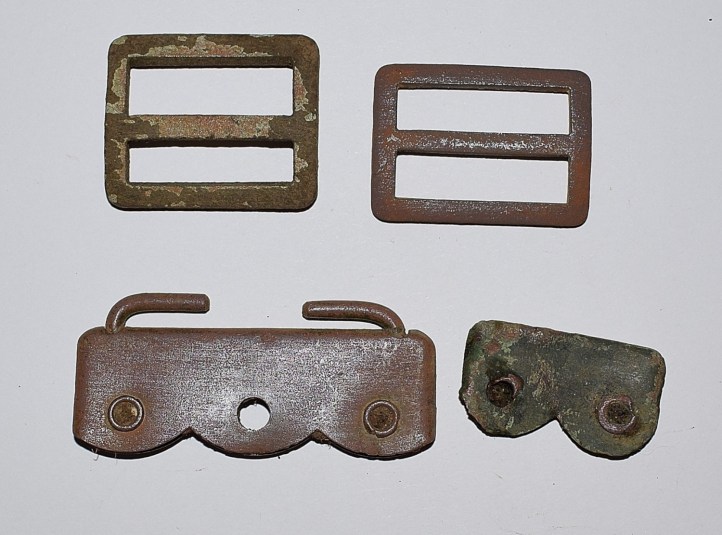
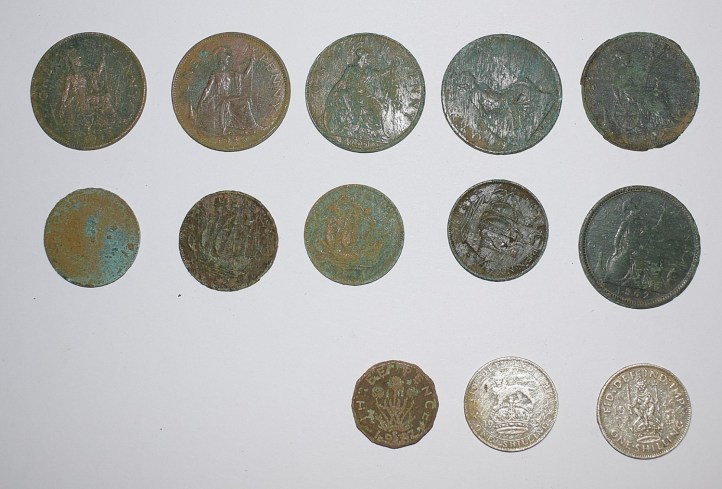




It is one of those sites that just keeps on giving. I often think that I have cleared an area, only to try again a few months/years later and recover even more relics. With metal detecting, ‘you have to walk over it to find it’ is always the case, and despite how careful I may be in walking a tight grid, strips of land get missed. It’s only when you return and start afresh that you may cover the bits you’ve inadvertently missed.
Other areas of the site still remain untouched, including a very large pond which I am certain will be full of relics. I have a heavy lift magnet, which I’ve tried from the banks, but the bed of the pond is littered with branches. Now, if I can just borrow a rowing boat…….
This site has a lot more relics yet to be found. The story will continue!
 Stephen Taylor, WW2 Relic Hunter
great work Stephen (Eric watkiss )
LikeLike
Evening Stephen, many thanks for the post , very interesting indeed.
Remembering your earlier post on your Weedon excavations. I wondered whether you have come across any Mk 1 Lee Metford Magazines ?
Kind Regards
Steve Hewitt
LikeLike
Awesome! Thank you for sharing.
LikeLike